
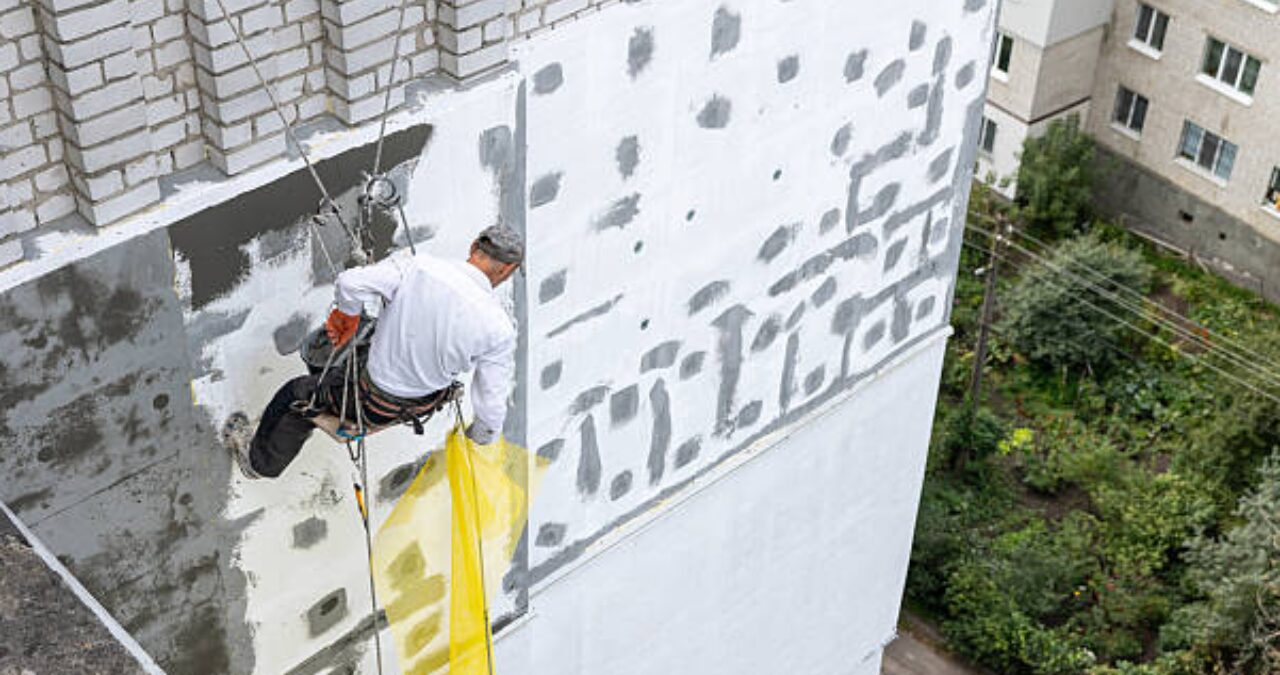
You just spent thousands repainting your facility. Six months later, you’re staring at bubbling paint, mildew spots, and peeling walls. If you’re in the Southeast, this probably sounds painfully familiar.
Here’s the thing: humidity is absolutely brutal on paint. And in places like Tennessee, Georgia, and Alabama where we regularly hit 85% humidity in summer, standard painting approaches just don’t cut it. After 30 years of coating industrial and commercial facilities across the Southeast, we’ve learned what actually works, and what’s a waste of money.
Why Your Paint Keeps Failing
Let’s talk about what’s really happening. When humidity is high, moisture gets trapped under your paint film. Think of it like putting a lid on a pot of boiling water, eventually, something’s got to give. That “something” is your paint, which starts bubbling, peeling, or growing mildew.
The Southeast creates a perfect storm: high humidity year-round, temperature swings, and if you’re running a manufacturing plant or distribution center, you’ve got even more moisture from your operations. It’s not your imagination, paint really does fail faster here.
Before you repaint again (and waste more money), you need to identify where the moisture is actually coming from:
Building issues: Leaks in your roof, damaged seals around windows, or cracks in your exterior walls let water in. Paint can’t fix structural problems.
Poor ventilation: Not enough air circulation means moisture gets trapped inside. This is huge in warehouses and manufacturing plants.
Your operations: Steam from processes, wash-down areas, or even just heat from machinery creates condensation that attacks your paint from behind.
Ground moisture: Water wicking up through concrete foundations—especially common in older buildings, pushes paint right off the walls.
Here’s what most contractors won’t tell you: if you don’t fix these underlying issues first, you’re just throwing money at a problem that’ll come back in months.
We tell every client the same thing: surface preparation is 70% of the success or failure for any paint job. In humid climates, you absolutely cannot skip this.
Not all paints handle moisture the same way. Here’s what actually matters:
For most commercial and industrial applications, you want paints with these features: breathability (so trapped moisture can escape), mildew resistance with EPA-registered mildewides, and elasticity to handle expansion and contraction.
Preventing paint failure in humid environments isn’t about finding magic paint—it’s about doing everything right: fixing moisture sources, preparing surfaces properly, using appropriate coatings, and applying them in the right conditions.
At Southeast Painters, we’ve spent three decades learning these lessons so our clients don’t have to keep repainting every few years.
Ready to stop the cycle of paint failure? Let’s talk about what your facility actually needs. Call us at (423) 558-3842 or visit southeastpainters.com for a proper assessment.
